
Dr. Deborah MacNamara

Therapist, Educator, and Author, Vancouver, BC
Deborah's PhD has been well put to use in opening doors for teaching at university, addressing esteemed institutions such as the United Nations and the Dalai Lama Center, developing her own professional counselling clinic, and expressing herself through writing. She appears regularly on media channels as well as writes for parenting websites and magazines. She is the author of three books (one on Preschoolers, one on Attachment & Food, and a children's book entitled The Sorry Plane) that are an integral part of the Neufeld Institute mission. She has an international reputation as a polished speaker and we are thrilled to have her as a senior member of our Faculty. Please see Deborah's website for more information.
Latest editorials by Dr. Deborah MacNamara


Books by Dr. Deborah MacNamara
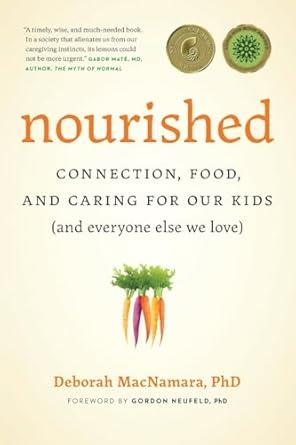
Nourished: Connection, Food, and Caring For Our Kids (and everyone else we love)
By Dr. Deborah MacNamara
What does it mean to be nourished? Nothing could be more basic than food. However, food is only one part of the concept of nourishment, but it has consumed our focus and eclipsed something far more critical for thriving — connection. We have lost sight of the fact that feeding our families is about human relationship and emotional well-being. In Nourished, developmental and relational clinical counsellor Dr. Deborah MacNamara shows us how feeding is part of the caretaking relationship and cannot be separated from it.
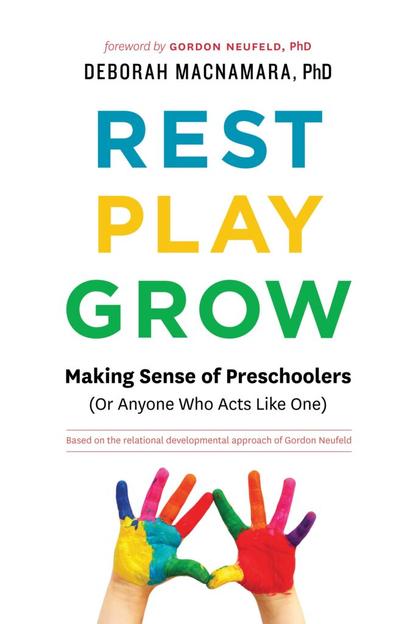
Rest, Play, Grow: Making Sense of Preschoolers (Or Anyone Who Acts Like One)
By Dr. Deborah MacNamara
Based on the work of Dr. Gordon Neufeld, this book, written by Dr. Deborah MacNamara, offers a road map to making sense of young children, and is what every toddler, preschooler, and kindergartener wishes we understood about them.
“This book is a tribute to Deborah’s giftedness … you could not be in better hands,” said Dr. Neufeld.

The Sorry Plane
Children’s Book by Dr. Deborah MacNamara
When Molly accidentally breaks a balloon she and her sister Lucy have found, Lucy demands an apology. But, as Molly describes in fanciful, imaginative scenarios, her sorries are all gone: hiding under the bed, down the sink, off to Paris on the Sorry Plane. As their mother explains, we can’t say sorry if we don’t have any sorries in us. But when our sorries return, as Molly’s eventually do, we can give them to others. Brilliantly illustrated with captivating images by artist Zoe Si, The Sorry Plane carries a profound message about the importance of connecting with our authentic emotions. It highlights how a good sorry is one that you mean from the heart and how adults can preserve a child’s caring spirit.
Inquiries
If you have questions or require additional information that you cannot find on our website or FAQ page, you may contact our office on our Inquiries page.
Charity & Non-Profit Status
The Neufeld Institute is a registered Canadian charitable organization under the name Neufeld Institute Foundation and is also registered as a NPO in British Columbia. If you would like to make a contribution to us, please go to our donation page.
Stay Connected with the Neufeld Institute
Sign up for our newsletter to receive insights, editorials, and updates on new courses, webinars, and scheduled classes — all rooted in the Neufeld approach. Whether you're a parent, educator, or professional, our resources are here to help you make sense of the children in your care.
You can also follow us on...
Vancouver, BC V6M 1L3
Canada